

In a bold proposal that could redefine planetary defense, scientists are exploring the creation of an orbital "StormWall" – a massive, ionized gas barricade designed to deflect the devastating energy of solar storms before they cripple Earth’s critical infrastructure. This audacious concept, detailed in a recent paper in the journal Space Weather, offers a radical alternative to conventional grid hardening, aiming to avert a modern-day catastrophe akin to the infamous 1859 Carrington Event.
The threat of severe space weather has long loomed over our increasingly technologically dependent world. While governments and industries have pondered various measures to protect power grids, communication networks, and satellites, a new vision suggests a proactive, space-based shield could be the ultimate safeguard.
Main Facts: A Cosmic Shield Against Solar Fury
The "StormWall" is not a physical barrier but a vast cloud of neutral gas, likely composed of alkali metal atoms, strategically deployed in Geosynchronous Earth Orbit (GEO). Its purpose is to act as a sacrificial layer, absorbing and scattering the immense energy of incoming geomagnetic storms before they can couple with Earth’s magnetosphere and induce harmful currents on the surface or damage orbital assets.
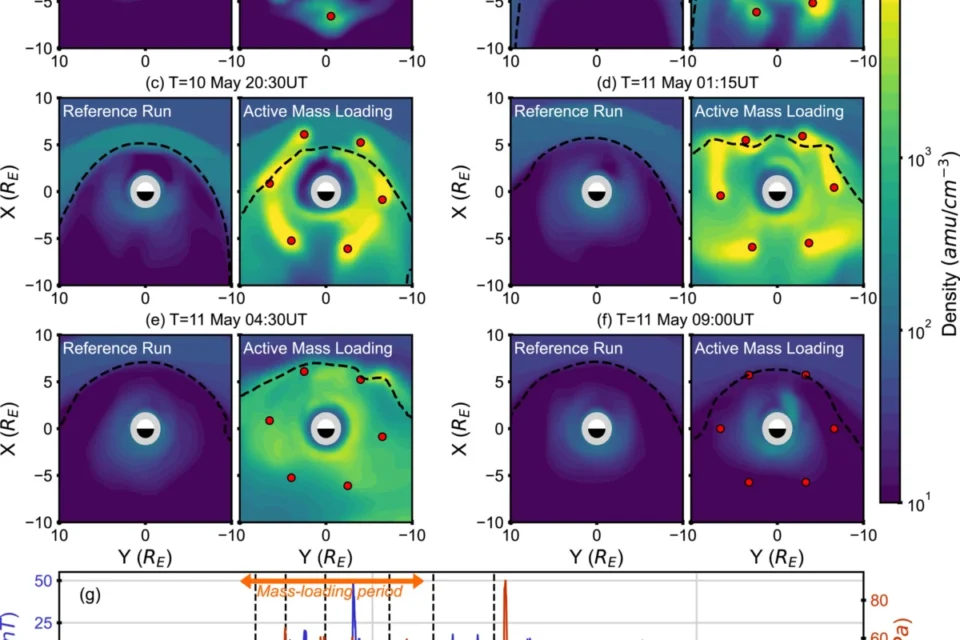
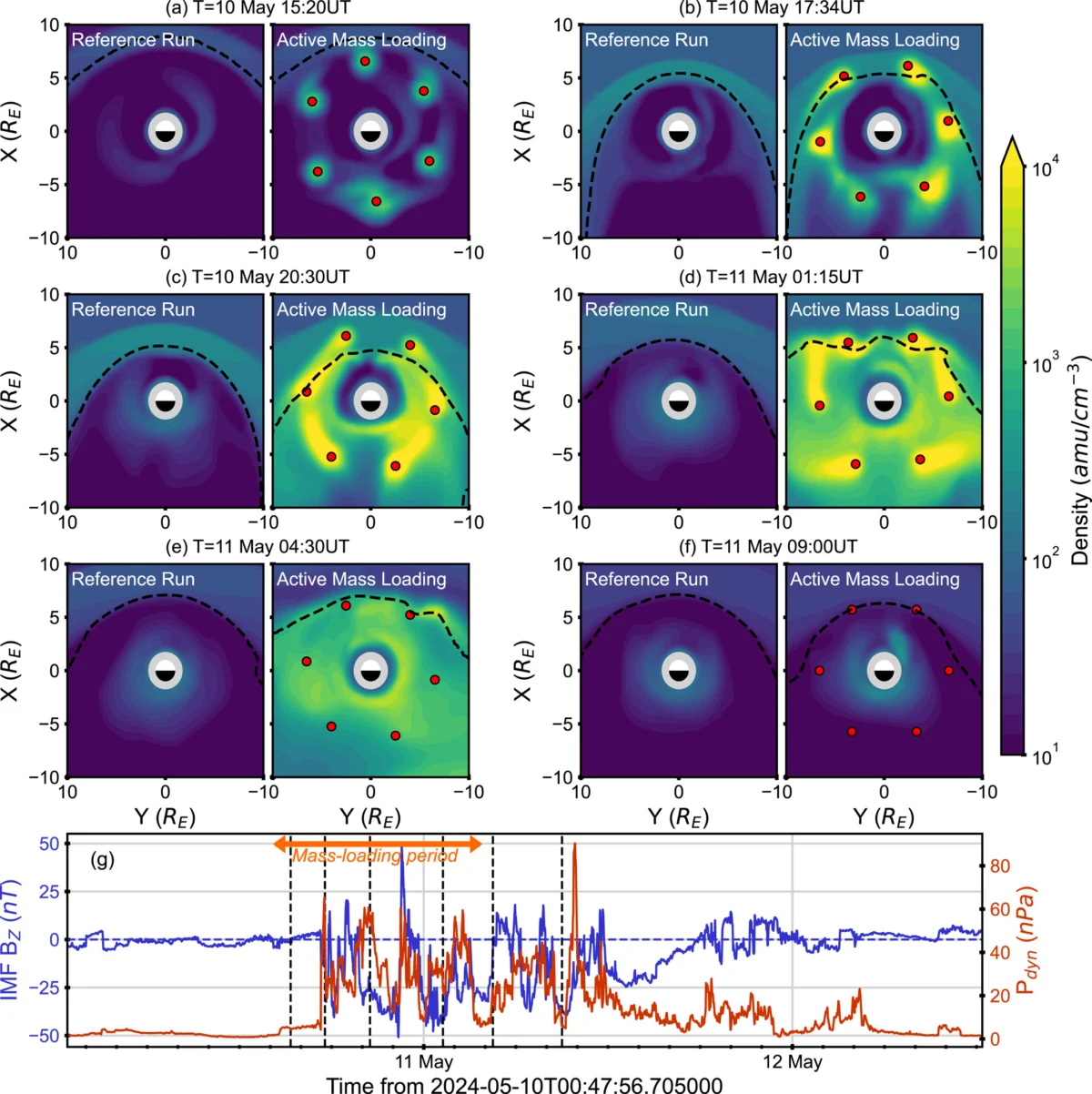
Proposed by researchers and recently published in Space Weather, this concept represents a significant departure from traditional, terrestrial-focused mitigation strategies. The scientists envision solar-powered satellites continuously releasing this gas, which would then be ionized by the very particles of the solar storm itself. Simulations suggest that such a wall could absorb up to 50% of a storm’s energy, drastically reducing its impact.
The implications are profound. Such a system would not only protect ground-based infrastructure like national power grids, which are highly susceptible to Geomagnetically Induced Currents (GICs), but also safeguard the myriad of satellites orbiting below the StormWall, from vital communication and navigation platforms in GEO to scientific research stations like the International Space Station (ISS) in Low Earth Orbit (LEO). The scale of the proposed project is immense, requiring hundreds of tons of gas, yet the researchers suggest it could be achievable with just a handful of launches from next-generation heavy-lift rockets like SpaceX’s Starship.
Chronology: From 19th-Century Shocks to 21st-Century Solutions
The understanding and concern regarding solar storms have evolved significantly over time, driven by both historical events and our increasing reliance on technology.
The Carrington Event: A Wake-Up Call from the Past
The benchmark for extreme space weather remains the Carrington Event of September 1859. Named after British astronomer Richard Carrington, who observed a massive solar flare directly preceding the storm, this event unleashed an unprecedented torrent of charged particles towards Earth. Within hours, auroras, typically confined to polar regions, were visible across the globe, as far south as the Caribbean and even close to the equator in Colombia. More alarmingly, the nascent global telegraph network experienced severe disruptions. Operators reported receiving electric shocks, and in some instances, telegraph paper caught fire. The induced currents were so strong that some lines could operate even after being disconnected from their power sources.
At the time, the world’s technological footprint was minimal. The electrical grid, modern telecommunications, and satellite networks were centuries away. Had an event of similar magnitude occurred today, the consequences would be catastrophic, potentially plunging vast regions into a "new dark age."
Growing Vulnerability in the Modern Era
Throughout the 20th century, as electrification and interconnectedness grew, the vulnerability to geomagnetic storms became more apparent.
- 1989 Quebec Blackout: A relatively minor geomagnetic storm caused a nine-hour power outage across Quebec, Canada, affecting six million people. The rapid fluctuation in Earth’s magnetic field induced currents in the Hydro-Québec power grid, leading to transformer failures and a cascading collapse. This event served as a stark reminder of the grid’s fragility.
- 2003 Halloween Storms: A series of powerful solar flares and coronal mass ejections (CMEs) caused widespread disruptions, including satellite outages, power grid fluctuations, and diversions of flights over polar routes.
- 2012 Near Miss: Perhaps the most sobering event of recent times was the 2012 solar storm. A CME comparable in intensity to the Carrington Event erupted from the sun and, by sheer luck, missed Earth by approximately nine days. Scientists later calculated that had it hit, the economic damage could have exceeded trillions of dollars, with recovery potentially taking years. This "near miss" significantly heightened awareness among scientists, governments, and industry stakeholders about the urgent need for mitigation strategies.
The Emergence of the "StormWall" Concept
In the decades following these events, research into space weather forecasting and mitigation intensified. Most efforts have focused on hardening existing infrastructure: designing more resilient transformers, implementing better grounding systems, and developing advanced warning systems to allow for temporary shutdowns of sensitive equipment. However, these solutions are often costly, localized, and may not fully protect against an extreme event.
The "StormWall" concept, as presented in the recent Space Weather paper, marks a conceptual leap. Instead of merely reacting to the storm’s effects on Earth, it proposes actively manipulating the space environment to reduce the storm’s intensity before it reaches our planet’s protective magnetosphere. This proactive, large-scale intervention represents a paradigm shift in how humanity might defend itself against cosmic threats, moving beyond passive protection to active planetary defense. The development of this theoretical framework underscores the ongoing quest for increasingly innovative and comprehensive solutions to safeguard our technological civilization.
Supporting Data: The Mechanics and Logistics of a Cosmic Shield
The "StormWall" is more than just a theoretical musing; it is backed by detailed simulations and a proposed logistical framework that, while challenging, appears within the realm of future technological capabilities.
Understanding Geomagnetic Storms and Their Impact
Geomagnetic storms originate from the sun, primarily from Coronal Mass Ejections (CMEs) – massive expulsions of plasma and magnetic field from the sun’s corona. When a CME impacts Earth’s magnetosphere, it can cause rapid fluctuations in the planet’s magnetic field. These fluctuations induce electric currents in long conductors on Earth’s surface, such as power lines, pipelines, and communication cables. These Geomagnetically Induced Currents (GICs) can overload and damage transformers, leading to widespread power outages. Beyond the grid, solar storms can also disrupt satellite operations through radiation damage, atmospheric drag (causing satellites to deorbit prematurely), and interference with radio signals. Astronauts in orbit are also exposed to increased radiation risks.
The "Artificial Mass Loading" Mechanism
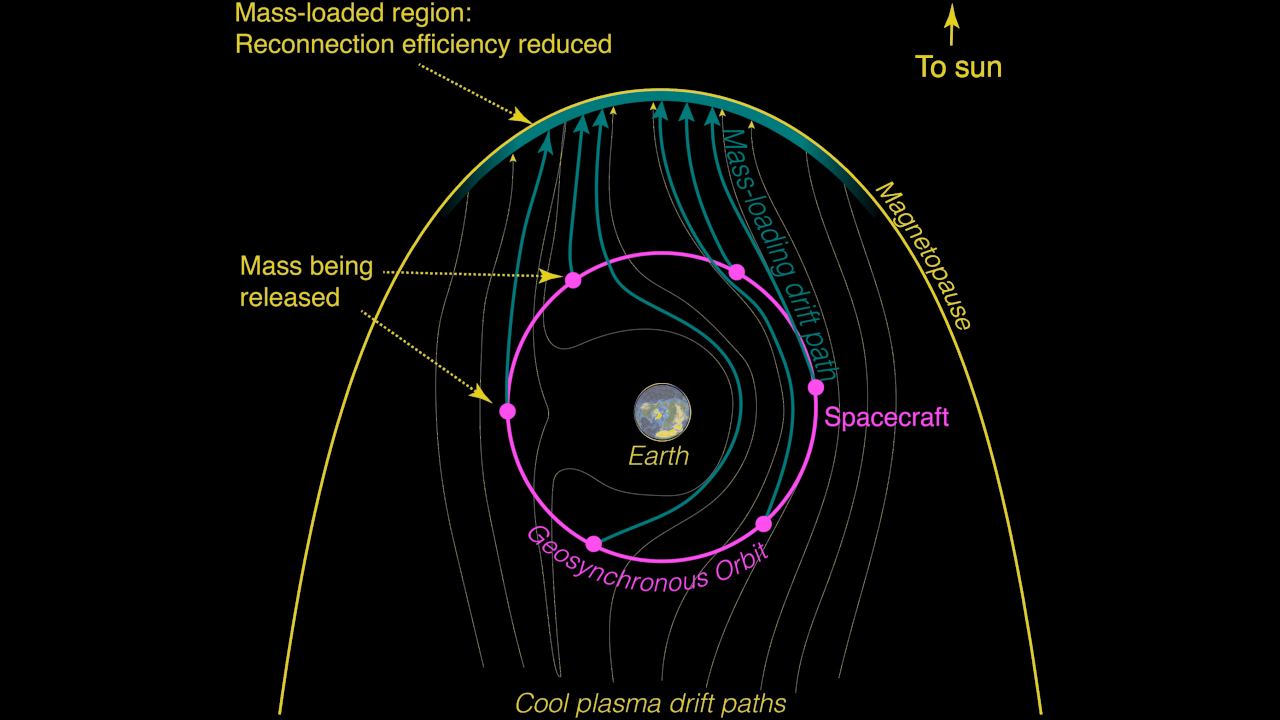
The core innovation of the StormWall lies in "artificial mass loading." The proposal is to inject a significant quantity of neutral gas, specifically alkali metal atoms like sodium or potassium, into Geosynchronous Earth Orbit (GEO), roughly 35,786 kilometers (22,236 miles) above the equator.
- Ionization: When a solar storm approaches, its highly energetic charged particles (protons and electrons) would collide with these neutral gas atoms. These collisions would strip electrons from the alkali metal atoms, ionizing them.
- Energy Absorption and Deflection: As these gas atoms become ionized, they become part of the plasma cloud and interact with the incoming magnetic fields and charged particles of the CME. This interaction causes the CME’s energy and momentum to be transferred to the much larger mass of the StormWall plasma. The sheer density and volume of the artificially created plasma would effectively act as a drag on the CME, dissipating its energy and deflecting its path.
- Decoupling from Earth’s Magnetosphere: By absorbing up to 50% of the incoming energy, the StormWall would significantly "frustrate" the coupling of the CME’s magnetic fields with Earth’s own magnetosphere. This reduced coupling means fewer and weaker geomagnetically induced currents on the surface and less disruption to the magnetosphere itself, which shields Earth from harmful radiation.
Dual Protection: Terrestrial and Orbital Assets
A key advantage of deploying the StormWall in GEO is its strategic position to protect both ground-based infrastructure and space assets. Satellites in GEO, typically used for telecommunications, weather monitoring, and navigation, would be within the protective cloud. Furthermore, the StormWall would absorb energy before it reaches lower orbits, safeguarding satellites in Medium Earth Orbit (MEO) and Low Earth Orbit (LEO), including the vital GPS constellation and the International Space Station. This comprehensive protection makes the StormWall concept particularly attractive, addressing vulnerabilities across multiple critical domains.
Logistical Feasibility and Scale
The proposed scale of the StormWall is substantial. Simulations indicate that 384,048 kilograms (approximately 384 tons) of gas would be required to achieve the desired protective effect. While this mass seems enormous, the paper’s authors offer a compelling logistical projection:
- Launch Vehicles: The advent of super heavy-lift launch systems, such as SpaceX’s Starship, makes such a deployment potentially feasible. Starship is designed to carry payloads of 100 metric tons (100,000 kg) or more to low Earth orbit, with significant projected capabilities for higher orbits like GEO or even Mars.
- Number of Launches: Assuming Starship’s projected GEO capabilities align with its stated payload capacity, the researchers estimate that "about six launches" would be sufficient to transport the required mass of gas and associated deployment hardware (tanking, satellites, etc.) into orbit.
- Deployment System: The gas would be released by a constellation of solar-powered satellites, ensuring a continuous and sustained presence of the protective cloud. These satellites would need to be robust and capable of precise deployment to maintain the integrity and effectiveness of the StormWall over its operational lifetime.
Compared to the incremental and often insufficient improvements to ground infrastructure, the StormWall offers a comprehensive, space-based defense that tackles the problem at its source. While the engineering and operational challenges are immense, the potential benefits of mitigating a multi-trillion-dollar global catastrophe provide a powerful impetus for further investigation.
Official Responses: A Mix of Scientific Interest, Skepticism, and Policy Implications
As a relatively new and ambitious concept, the "StormWall" has not yet garnered widespread official endorsements. However, its publication in a respected journal like Space Weather signals its entry into serious scientific discourse, likely prompting a range of responses from the scientific community, government agencies, and industry stakeholders.
The Scientific Community: Intrigue and Scrutiny
Within the space weather and astrophysics communities, the StormWall proposal is likely to be met with a mixture of intrigue and rigorous scrutiny.
- Positive Reception: Researchers are always looking for novel solutions to complex problems, and the idea of an active, space-based defense against solar storms is inherently captivating. The detailed simulations and logistical projections presented in the paper provide a solid starting point for further theoretical and computational research. It opens new avenues for exploring plasma physics in the context of planetary protection.
- Skepticism and Further Questions: However, such a radical proposal will undoubtedly face considerable skepticism. Scientists will demand more detailed analyses of the long-term stability of the gas cloud, its potential interactions with the natural space environment, and the precise efficiency of energy absorption under varying storm conditions. Questions regarding the precise ionization process, the optimal type and density of gas, and the potential for secondary effects (e.g., increased space debris from satellite deployment or gas interactions) will be paramount. Peer review will likely focus on the robustness of the models and the underlying physical assumptions.
Government Agencies: Monitoring, Research, and Policy Challenges
Agencies like NASA, NOAA (National Oceanic and Atmospheric Administration), and ESA (European Space Agency), which are deeply involved in space weather monitoring, forecasting, and mitigation research, would likely approach the StormWall concept with cautious interest.
- Initial Assessment: Their initial response would involve evaluating the paper’s scientific merit and feasibility. They would likely fund further academic research to validate or refute the claims made.
- Policy and Funding: Should the concept prove viable, it would present enormous policy challenges. The sheer scale and cost of such a project would necessitate significant government investment, potentially spanning multiple international collaborations. Deciding which nation or consortium would lead, fund, and control such a vital global defense system would be a complex geopolitical issue.
- Environmental Concerns: Government agencies are also responsible for environmental stewardship. The release of hundreds of tons of foreign material into GEO, even if it’s just gas, would trigger extensive environmental impact assessments concerning its long-term effects on the magnetosphere, other space missions, and the potential for contributing to space pollution, even if temporary.
Industry Stakeholders: Risk vs. Reward
Industries most vulnerable to space weather, such as power grid operators, satellite telecommunication companies, and aerospace manufacturers, would view the StormWall through a pragmatic lens of risk versus reward.
- Potential Beneficiaries: They would be the primary beneficiaries of a successful StormWall, as it would significantly reduce their operational risks and potential financial losses from solar storms. The projected trillions of dollars in economic damage from a Carrington-level event provide a powerful incentive to consider even radical solutions.
- Cost-Benefit Analysis: However, the massive upfront investment required for the StormWall would necessitate a thorough cost-benefit analysis. Industry might advocate for government funding, seeing it as a public good, similar to national defense. They would also weigh this against existing, albeit less comprehensive, mitigation strategies that are already being implemented or considered, such as hardening individual transformers or improving localized shielding.
In essence, the StormWall proposal has opened a new frontier in space weather defense. While it promises an unprecedented level of protection, it simultaneously presents a formidable set of scientific, engineering, economic, and geopolitical hurdles that will require extensive debate and collaboration to overcome.
Implications: A New Era of Planetary Defense
The "StormWall" concept, if ever realized, carries profound implications across technological, economic, geopolitical, and societal dimensions, potentially ushering in a new era of proactive planetary defense.
A Paradigm Shift in Planetary Defense
Historically, humanity’s approach to natural disasters has largely been reactive or focused on localized mitigation. The StormWall represents a fundamental shift: instead of merely preparing for the inevitable impact of a space weather event, we would actively intervene in the space environment to diminish its threat. This moves humanity from a passive recipient of cosmic forces to an active manager of its near-Earth space environment, a significant leap in our technological maturity and ambition. It could pave the way for other forms of space-based environmental management or defense.
Catalyzing Technological Advancement
The engineering challenges associated with the StormWall are immense, but tackling them would drive significant technological advancements across multiple sectors:
- Heavy-Lift Launch Capabilities: The project would necessitate the development and routine operation of super heavy-lift rockets, accelerating advancements in reusable rocketry and cost-effective access to space.
- Advanced Satellite Systems: It would push the boundaries of satellite technology, requiring highly autonomous, solar-powered spacecraft capable of precise gas deployment and sustained operation in the harsh radiation environment of GEO.
- Material Science: Research into the optimal alkali metal gases and their storage and release mechanisms would likely lead to innovations in material science and propulsion systems.
- Space Weather Forecasting and Modeling: The need to accurately predict and respond to solar storms would further refine our understanding and modeling capabilities of space weather phenomena.
Economic Stability and Growth
The economic implications are perhaps the most compelling driver for considering such a project. The estimated cost of a Carrington-level event today ranges from hundreds of billions to several trillion dollars, encompassing direct infrastructure damage, loss of data, communication blackouts, supply chain disruptions, and prolonged societal upheaval.
- Cost vs. Catastrophe: While the StormWall would require a massive upfront investment (likely tens or hundreds of billions of dollars), this pales in comparison to the potential economic devastation it seeks to prevent. It could be seen as the ultimate insurance policy for the global digital economy.
- New Space Economy: The project would also create a new sector within the space economy, driving job creation in research, manufacturing, launch services, and orbital operations.
Geopolitical Complexities and International Cooperation
Deploying and managing a StormWall would raise significant geopolitical questions:
- Ownership and Control: Who would own and control such a critical global defense asset? A single nation, a consortium of nations, or an international body? The implications for national security and global power dynamics are immense.
- International Treaties: It would likely necessitate new international treaties and agreements to govern the deployment, operation, and potential environmental impacts of such a large-scale space intervention.
- Funding Models: Developing an equitable and sustainable funding model for a global public good would be a major challenge, requiring unprecedented levels of international cooperation.
Societal Assurance and Future Resilience
Ultimately, the successful deployment of a StormWall would offer an unparalleled level of assurance to global society. It would significantly reduce anxiety about the existential threat posed by extreme space weather, allowing societies to continue their technological advancement with greater confidence. It would demonstrate humanity’s capacity for foresight, innovation, and collective action in the face of global challenges, strengthening our resilience as a species.
While the "StormWall" remains a concept requiring extensive further research, experimentation, and international dialogue, its emergence signifies a pivotal moment in our approach to space weather. It challenges us to think beyond conventional boundaries, to leverage our growing technological prowess for planetary-scale protection, and to envision a future where even the sun’s most violent outbursts can be met with a sophisticated, orbital defense. The path to building such a shield is fraught with challenges, but the potential reward—safeguarding our modern civilization—is immeasurable.